Sharps Waste Disposal
Sharps waste is often underestimated, but it is one of the most important types of medical waste to manage properly because needles, syringes, lancets, and similar items are used frequently in many care settings. If not handled correctly, sharps can cause injuries, contamination, and potential exposure to infectious materials.
Proper sharps disposal helps protect healthcare workers, patients, caregivers, waste handlers, and the community. Whether generated in hospitals, clinics, dental offices, laboratories, or even home care environments, sharps must be placed in approved containers and managed through safe disposal procedures to reduce risk and support compliance.
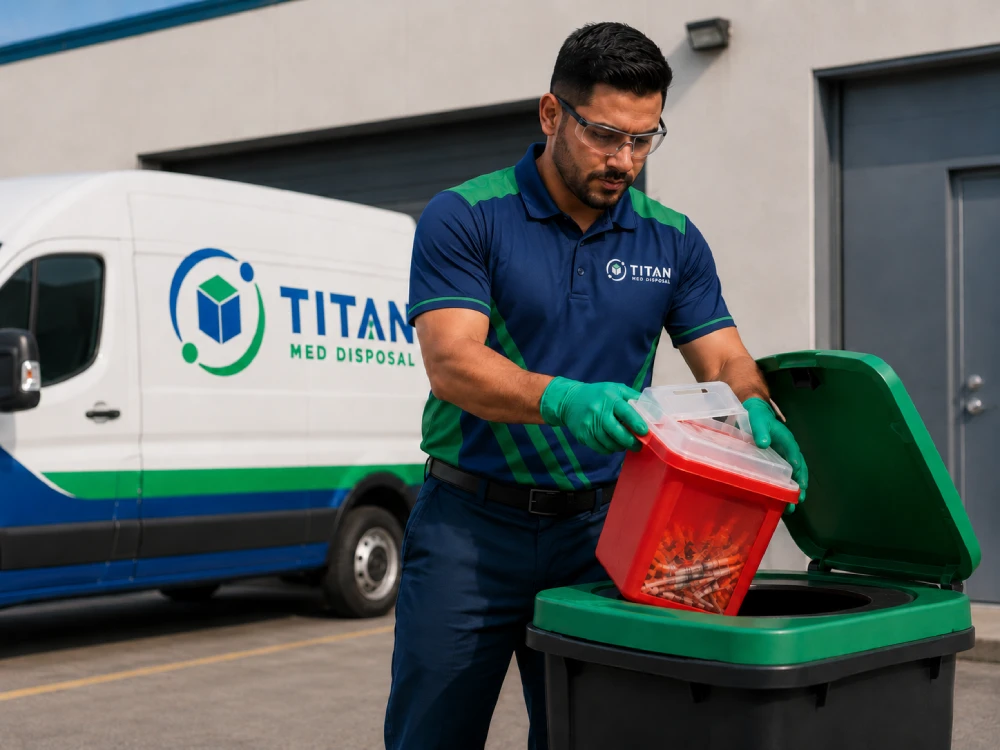
Why Proper Sharps Disposal Matters
Improper sharps disposal can create serious safety risks for healthcare facilities, workers, patients, and the public. Needles, syringes, lancets, and other sharp items can cause accidental injuries if they are not placed in approved sharps containers and handled correctly.
In medical settings, unsafe disposal may lead to needle-stick injuries and possible exposure to bloodborne pathogens such as hepatitis B, hepatitis C, and HIV. These incidents can also create additional costs, compliance concerns, and liability risks for healthcare providers.
Improperly discarded sharps can also harm waste handlers, cleaning staff, and members of the community. If sharps are left in regular trash or public areas, they may cause injuries and increase the risk of infection.
Environmental damage is another concern. When sharps waste is not managed properly, it can contribute to contamination and create hazards for sanitation systems, wildlife, and surrounding ecosystems.
Proper Sharps Waste Management
Preventing Needlestick Injuries
Needlestick injuries can create serious health risks, especially when sharps are contaminated with blood or other potentially infectious materials. To reduce these risks, used needles should never be recapped, bent, broken, or placed in regular trash. Proper disposal in a secure sharps container helps prevent accidental punctures and supports a safer care environment.
Compliance and Proper Handling
Sharps disposal must follow applicable safety and medical waste requirements. Proper collection, storage, labeling, transportation, and disposal help healthcare facilities stay compliant and reduce liability. Clear procedures and staff training also play an important role in keeping sharps waste managed safely.
BIOHAZARDOUS WASTE DISPOSAL
Biohazardous waste refers to materials that contain infectious agents or are potentially infectious, posing a risk of disease transmission. This includes items contaminated with body fluids or human blood, such as used surgical gloves, blood culture bottles, and contaminated swabs. Proper disposal is crucial to prevent the spread of infectious diseases and ensure public safety.
Sharps Disposal Containers
Sharps containers are designed to safely hold used needles and other sharp medical items. They are made from puncture-resistant, leak-resistant materials and should be placed in areas where sharps are commonly used. Using the right container helps prevent spills, injuries, and improper disposal.
Medical Waste FAQs
What is sharps waste?
Sharps waste includes needles, syringes, lancets, scalpels, pen needles, and other medical items that can puncture or cut the skin.
Why is proper sharps disposal important?
Proper sharps disposal helps prevent needlestick injuries, contamination, infection risks, and unsafe exposure for healthcare workers, patients, waste handlers, and the public.
Where should used sharps be placed?
Used sharps should be placed immediately into approved sharps disposal containers that are puncture-resistant, leak-resistant, and securely closed.
Can sharps be thrown in regular trash?
No. Sharps should not be placed in regular trash because they can injure cleaning staff, waste handlers, and others who may come into contact with them.
What facilities need sharps disposal services?
Hospitals, medical clinics, dental offices, laboratories, veterinary clinics, pharmacies, wellness centers, and home healthcare providers may need sharps disposal services.
How does proper sharps management support compliance?
Proper sharps management helps facilities follow required handling, storage, labeling, pickup, and disposal procedures for regulated medical waste.