Red Bag Waste Disposal
Red bag waste includes regulated medical waste that may be contaminated with blood, bodily fluids, or other potentially infectious materials. These bags are used to safely separate certain medical waste from regular trash and other waste categories.
Proper red bag disposal helps prevent contamination, reduce exposure risks, and support safer healthcare operations. Understanding what belongs in red bags also helps facilities stay organized, avoid improper disposal, and follow responsible waste management practices.
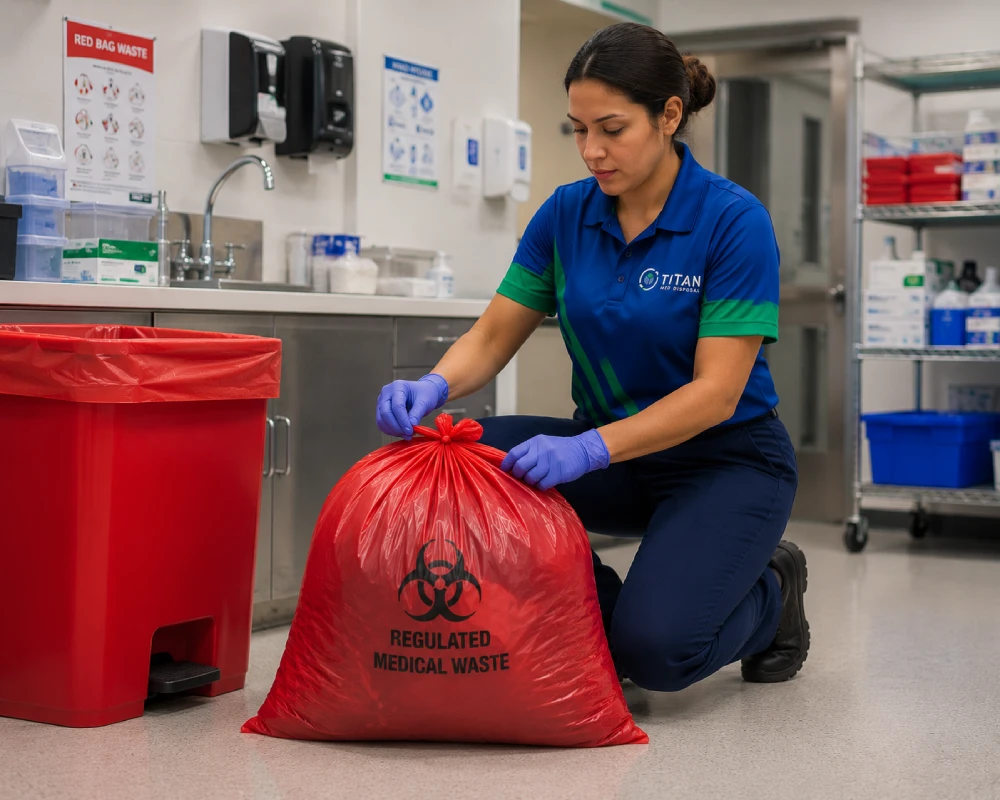
What Is Red Bag Medical Waste?
Red bag medical waste refers to waste generated in healthcare settings that may contain potentially infectious or biohazardous materials. It is commonly produced by hospitals, medical clinics, laboratories, dental offices, and other facilities where patient care, testing, or treatment takes place.
This type of waste may include items contaminated with blood, bodily fluids, or other materials that could pose a risk of infection. Red bags help separate this waste from regular trash so it can be collected, transported, and disposed of through proper medical waste procedures.
Proper red bag waste management helps reduce exposure risks, prevent contamination, and support a safer environment for healthcare workers, patients, waste handlers, and the community.
Types of waste
Human Tissues
Red bag waste may include human tissues, organs, specimen swabs, or other tissue-related materials collected during medical procedures, testing, or treatment. Because these materials may carry infectious pathogens, they must be handled carefully and kept separate from regular waste.
Blood Products
Blood products include liquid blood, semi-liquid blood, and materials that are visibly soaked or saturated with blood. Items such as gauze, dressings, pads, tubing, or other supplies exposed to blood may require red bag disposal to reduce the risk of contamination and exposure.
Bodily Fluids
Certain bodily fluids, such as serum, plasma, and other potentially infectious fluids, may be classified as red bag waste when they pose a biological risk. Proper collection and disposal help protect healthcare workers, cleaning staff, waste handlers, and patients from possible exposure.
Biological Materials
Biological materials can include microbiological waste, culture plates, laboratory samples, testing materials, and other items used in clinical or research environments. These materials may contain organisms or contaminants that require secure handling and proper medical waste disposal.
Used Protective Equipment
Animal Research Waste
Animal tissues, carcasses, or related materials used in medical research or laboratory settings may require red bag disposal when they are connected to infectious or biohazardous substances. These items must be managed carefully to protect staff, public health, and the environment.
Red Bag Waste FAQs
What is red bag medical waste?
Red bag medical waste includes materials that may be contaminated with blood, bodily fluids, infectious substances, or other biohazardous materials.
What items should go into a red bag?
Items may include blood-soaked gauze, contaminated PPE, specimen swabs, certain bodily fluids, culture plates, and other materials that may carry infectious risk.
Why is red bag waste separated from regular trash?
Red bag waste is separated to reduce contamination risks, protect workers and patients, and ensure the waste is handled through proper medical disposal procedures.
Can sharps go into red bags?
No. Needles, syringes, scalpels, and other sharps should be placed in approved sharps containers, not directly into red bags.
Who generates red bag medical waste?
This issue is caused if the Flash plugin is not enabled, or has crashed. Alternatively, if there are Flash blocker plugins installed in the browser, the connection will not work. If you are still stuck at Loading Flash, please contact support.
How should red bag waste be managed safely?
Facilities should separate waste correctly, use approved red bags, follow storage and pickup procedures, and work with a qualified medical waste disposal provider.