Amalgam Waste Disposal
Dental practices produce different types of regulated waste, including sharps, contaminated materials, amalgam-related waste, and filtration components. Proper disposal is essential to help protect patients, staff, the community, and the environment. A strong waste management process helps dental clinics stay compliant while supporting responsible and safe daily operations.
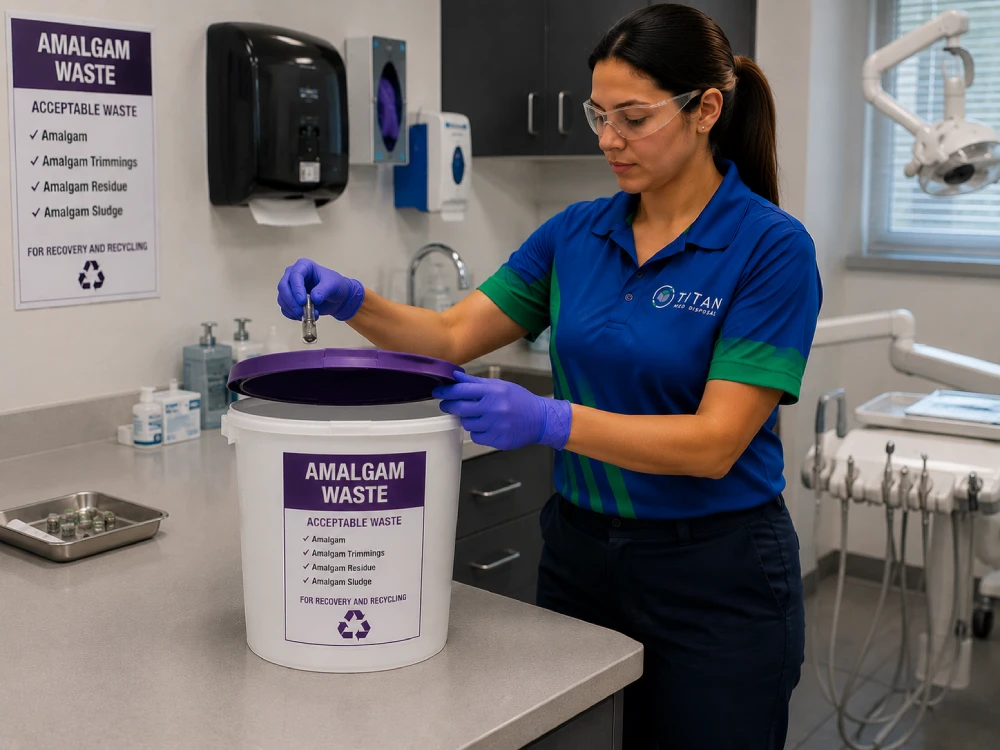
Responsible Amalgam Waste Management
Dental practices generate amalgam-related waste that must be handled carefully because it may contain mercury and other regulated materials. Proper disposal procedures and the use of amalgam separators help prevent waste particles from entering wastewater systems and reduce environmental impact.
Chair-side traps, vacuum pump filters, sharps containers, and proper collection methods also support safe waste management inside the dental office. Following the right process helps protect water systems, public health, and the environment.
Working with a qualified disposal provider helps dental teams manage amalgam and other regulated waste safely, responsibly, and in compliance with applicable requirements.
Types of Amalgam Waste
Proper amalgam waste management helps prevent mercury and other regulated materials from entering the environment. Dental facilities must follow strict handling, storage, and disposal practices to reduce risks and support compliance.
Amalgam Capsules
Chair-Side Traps and Disposable Traps
Vacuum Pump Filters
Vacuum pump filters collect waste materials from dental suction systems and equipment during daily operations. Over time, these filters can accumulate amalgam particles, biological material, and other dental debris. Regular replacement and proper disposal are important to keep equipment functioning correctly and to reduce the risk of contamination.
Mercury Amalgam Particles
Mercury amalgam particles are small waste fragments created during dental procedures such as filling removal, restoration work, oral surgery, and other clinical treatments. These particles may contain mercury, which can be harmful to the environment if not managed correctly. Collecting and disposing of them properly helps dental offices stay compliant and protect water systems, staff, patients, and the community.
Amalgam Waste FAQs
How does Titan Medical Waste help dental clinics manage amalgam waste?
Titan Medical Waste helps dental clinics manage amalgam-related waste through safe collection, proper handling, and responsible disposal support. This helps facilities reduce environmental risk and maintain a cleaner, more compliant waste process.
What types of amalgam waste can Titan Medical Waste support?
Titan Medical Waste can support the proper disposal of amalgam capsules, chair-side traps, disposable traps, vacuum pump filters, and mercury amalgam particles generated during dental procedures.
Why is proper amalgam waste disposal important for dental offices?
Amalgam waste may contain mercury and other regulated materials, which should not be placed in regular trash or allowed to enter wastewater systems. Proper disposal helps protect staff, patients, the environment, and public health.
Can Titan Medical Waste help with chair-side traps and vacuum pump filters?
Does Titan Medical Waste provide disposal solutions for small dental practices?
Yes. Titan Medical Waste works with dental practices of all sizes, from small private offices to large dental clinics, offering service options that fit each facility’s waste volume and needs.
Why should dental clinics choose Titan Medical Waste for amalgam waste disposal?
Dental clinics choose Titan Medical Waste because proper amalgam disposal requires careful handling, compliance-focused procedures, and dependable service. Titan helps make the process safer, easier, and more organized for dental teams.