Chemotherapy Waste Disposal
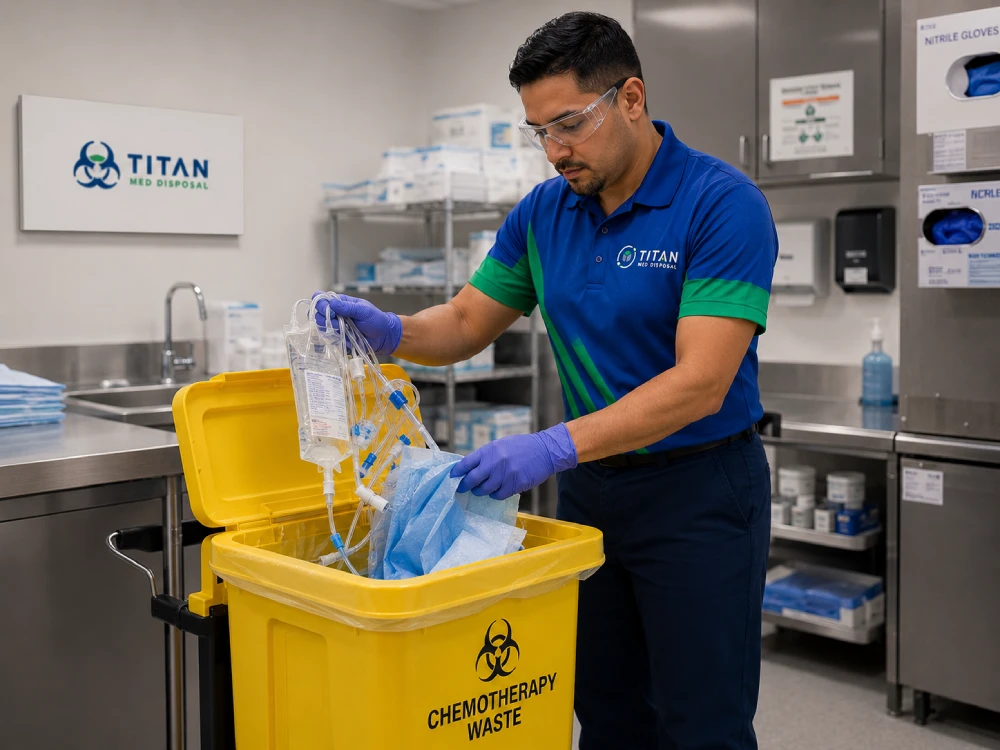
Chemotherapy plays an important role in cancer treatment, but it also creates waste that must be managed with extra care. Items that come into contact with chemotherapy drugs, such as IV bags, tubing, gloves, gowns, wipes, syringes, and other treatment materials, may contain hazardous residue and require specialized handling.
Proper chemotherapy waste disposal helps protect healthcare workers, patients, waste handlers, and the environment from potential exposure. Because these materials can carry chemical risks, they must be separated, contained, transported, and disposed of through appropriate medical waste procedures.
A safe disposal process supports compliance, reduces contamination risks, and helps healthcare facilities maintain a cleaner and safer treatment environment.
What Is Chemotherapy Waste?
Chemotherapy waste is medical waste generated during the preparation, handling, and administration of chemotherapy drugs. Because these medications can be hazardous, any item that comes into contact with them must be managed carefully to reduce exposure risks for healthcare workers, patients, waste handlers, and the environment.
This type of waste may include IV bags, tubing, gloves, gowns, masks, gauze, pads, syringes, drug vials, expired medications, and materials containing chemotherapy residue. Some items may only contain small trace amounts, while others may hold larger quantities of unused or leftover drugs, which require stricter handling.
Proper chemotherapy waste disposal helps prevent contamination, supports compliance, and keeps treatment areas safer, cleaner, and better organized.
Types of Chemotherapy Waste
Proper chemotherapy waste disposal helps protect healthcare workers, patients, waste handlers, and the environment from harmful exposure. Managing trace and bulk chemotherapy waste correctly also supports safer treatment areas and helps healthcare facilities stay compliant with disposal requirements.
Trace Chemotherapy Waste
Trace chemotherapy waste includes items that have come into contact with chemotherapy drugs but contain only small leftover amounts. These materials may include empty IV bags and tubing, used gloves, gowns, masks, syringe wrappers, contaminated gauze, pads, and other treatment supplies. Even when the residue is minimal, these items still require proper separation, containment, and disposal to reduce exposure risks.
Bulk Chemotherapy Waste
Bulk chemotherapy waste includes materials that contain a larger amount of chemotherapy drug or unused medication. This may include partially used drug vials, expired chemotherapy drugs, contaminated sharps with drug residue, and IV bags or tubing that still contain more than trace amounts. Because this waste may be more hazardous, it requires stricter handling and specialized disposal procedures.
Chemotherapy Waste FAQs
What is chemotherapy waste?
Chemotherapy waste includes materials generated during the preparation, handling, or administration of chemotherapy drugs.
What are the main types of chemotherapy waste?
The two main types are trace chemotherapy waste and bulk chemotherapy waste.
What is trace chemotherapy waste?
Trace chemotherapy waste includes items with small leftover amounts of chemotherapy residue, such as empty IV bags, tubing, gloves, gowns, masks, gauze, and pads.
What is bulk chemotherapy waste?
Bulk chemotherapy waste includes items with larger amounts of chemotherapy drugs, such as partially used vials, expired medications, contaminated sharps, or IV bags with remaining liquid.
Why does chemotherapy waste require special disposal?
Because chemotherapy drugs may be hazardous, improper disposal can create exposure risks for staff, patients, waste handlers, and the environment.