Scooter Repairs and Maintenance
Our technicians inspect the scooter’s major systems, identify the source of the problem, and recommend the appropriate service. We may assist with batteries, chargers, controls, tires, wheels, seating, electrical connections, and other components depending on the scooter model.
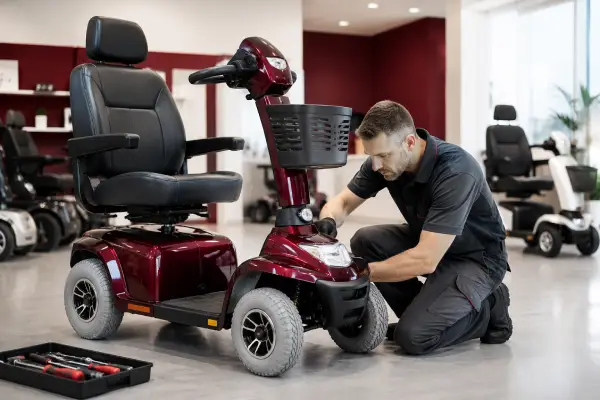
What Is Mobility Scooter Maintenance?
Scooter maintenance involves checking the equipment’s battery system, brakes, steering, wheels, controls, connections, seat, and frame. These inspections help identify wear, damage, or performance problems before they become more serious.
Signs that a scooter may require service include reduced travel distance, slow acceleration, difficulty turning, charging problems, unusual sounds, error codes, unstable movement, or sudden power loss.
Scooter Repair FAQs
What scooter problems can you inspect?
We can evaluate charging problems, reduced battery performance, control issues, steering concerns, unusual sounds, and mobility problems.
Can you replace mobility scooter batteries?
Battery replacement may be available when compatible batteries can be sourced for the scooter model.
Do you repair scooter tires and wheels?
Yes. Tire, wheel, and caster-related service may be available depending on the equipment and replacement-part availability.
Why is my scooter not holding a charge?
The problem may involve the battery, charger, wiring, charging port, or another electrical component. An inspection is needed to identify the cause.
How often should a mobility scooter receive maintenance?
Improper disposal can lead to drug misuse, accidental poisoning, chemical exposure, soil contamination, water pollution, and harm to people, animals, and the environment.
Do you provide pickup or delivery service?
Pharmaceutical waste disposal may be governed by local, state, and federal requirements depending on the waste type. Facilities should follow proper handling, storage, labeling, transportation, and disposal procedures to remain compliant.